Rules, Grants or Services? Three Different Policy Tools
Compare rules, grants, and direct services to choose a rural policy tool that matches local capacity, assigns clear responsibility, and serves its intended purpose.
Which policy tool fits a rural goal when the people expected to act have different capacities? Rules, grants, and public services can address the same problem, but they place responsibility in different hands. The choice should follow the specific obstacle between the goal and the change residents need to see.
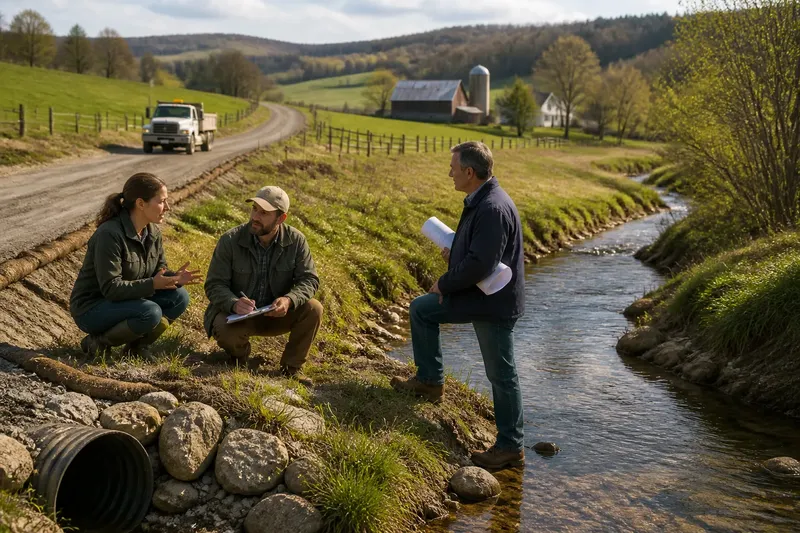
Imagine a small watershed partnership wants farms and local agencies to reduce runoff entering a creek. Some landowners may need clear requirements; a conservation group may be ready to help but lack staff; and some land may have no adviser available. Those conditions point toward different tools—and show why choosing by label alone is not enough.
Find the barrier
Start by identifying what prevents the desired change. Is conduct creating harm because expectations are unclear? Is a capable organization short of money or expertise? Or is there no provider able to do the work? A tool that addresses the wrong barrier can add obligations without changing what happens on the ground.
Rules set requirements or limits. Grants provide resources for an agreed purpose. Direct services put delivery in the hands of a public agency or an organization acting for it. Each can work well, but none supplies every missing ingredient by itself.
Rules and responsibilities
A rule fits when a defined actor can change its conduct and a common standard is needed. For example, a county might require erosion controls during certain land-disturbing work. A clear rule can set a shared floor across scattered communities, but consistent wording does not mean every organization has equal capacity to comply.
Before adopting a requirement, identify who is responsible, how compliance can be checked fairly, and what technical support smaller operators may need. A rule that depends on specialized plans or equipment may create a paper obligation if the responsible parties cannot obtain them. Enforcement also needs a proportionate approach: monitoring should be practical, and consequences should be understandable.
Rules are a poor substitute for missing capacity. If a small district lacks trained staff to inspect sites, an inspection mandate alone may not produce reliable oversight. The policy may need technical assistance, a shared regional resource, or a different delivery arrangement.
Grants and local capacity
A grant fits when a plausible recipient can carry out a public task but needs resources to do it. A county conservation office, tribal government, or local nonprofit might use funding to provide landowner advice, coordinate projects, or build technical capacity. Local knowledge can help tailor the work to varied soils, slopes, and access conditions.
The grant’s administrative demands matter as much as its purpose. Applications, eligibility rules, spending records, and reports all take staff time. If those requirements are beyond a small recipient’s capacity, the intended beneficiary may be least able to secure the support. Simpler applications, shared grant administration, or technical help can address that mismatch.
Consider continuity before making a grant the whole plan. If the funded work creates an ongoing service, specify what happens when the award ends: another source may take over, the service may close, or the grant may be intended to build capacity for a lasting arrangement. Clear expectations prevent a temporary funding decision from being mistaken for a permanent commitment.
Services and public delivery
Direct service delivery fits when residents need a concrete public function and government can organize the people and operations to provide it. A county agency might offer soil assessments or coordinate shared technical advisers where no local provider is available. This gives the agency direct responsibility for staffing, scheduling, standards, and adjustments.
That control comes with operating duties. The agency must recruit suitable workers, maintain useful local access, and respond when conditions change. A central office may be easier to manage, while outreach visits or shared regional staff may better serve remote communities. The arrangement should match the places and people the policy is meant to reach.
Public ownership is not the same as dependable delivery. A local partner may have stronger relationships and practical knowledge, while an agency may be better placed to coordinate across jurisdictions. Compare the actual capacity and accountability of each option rather than assuming one form is inherently superior.
Which tool fits?
When is a rule the right choice?
A rule fits when a specific actor can change conduct and a common requirement is necessary. Check that the responsible party can comply and that oversight is practical; if not, pair the rule with support or choose a different approach.
When does a grant make sense?
A grant makes sense when a capable recipient can do the work but lacks resources. Match the funding conditions and duration to the task; if reporting or continuity demands exceed local capacity, simplify administration or build another delivery plan.
When should government provide a service?
Direct delivery may fit when the need is concrete and no suitable provider is available. Confirm that the agency can staff and reach the service; if it cannot, develop a partnership or local capacity before promising routine provision.
Can the tools be combined?
Yes, when each tool has a distinct job, such as setting a standard, supporting a local recipient, or covering places without a provider. Name who coordinates the work; if responsibilities overlap or leave gaps, revise the arrangement before adding another layer.
Match tools to tasks
Say a rural county wants to reduce sediment from roadside ditches entering a creek. Imagine the county has a small public works crew, a conservation nonprofit willing to advise landowners, and several outlying roads without nearby technical help. The county could set a clear maintenance standard for public road work, offer the nonprofit a grant to advise landowners, and assign its crew to assess the uncovered roads. The expected observable result is that each task has a named responsible party and that advice or maintenance reaches the places included in the plan. If the crew cannot take on assessments, the county would need to arrange regional support rather than leave that duty implied.
Use these checks to compare options before committing resources:
- Check whether a specific actor controls the conduct at issue; if yes, consider a rule, and if no, fund or organize the missing capacity instead.
- Check whether a local recipient has the staff and skills for the task; if yes, consider a grant, and if no, provide technical support or build a provider.
- Check whether grant reporting fits the recipient’s administrative capacity; if yes, retain the proposed terms, and if no, simplify them or provide shared administration.
- Check whether the work must continue after funding ends; if yes, identify a continuing source or public role, and if no, define the limited purpose and closeout plan.
- Check whether a public agency can staff and manage direct delivery; if yes, assign the service clearly, and if no, develop a partnership or capacity before making a service commitment.
- Check whether remote locations are included in the delivery plan; if yes, keep the arrangement, and if no, add outreach or regional coverage rather than treating central availability as sufficient.
What is not worth the effort is choosing a tool by its name or layering instruments without distinct duties. A grant does not automatically adapt to local needs, and public delivery does not automatically reach every place. Explain what each tool enables, who carries the responsibility, and how the intended change will be visible.
Follow delivery outward
Trace each policy choice from the decision-maker to the person expected to act, then to the resident or landscape meant to benefit. This exposes common gaps: a requirement without compliance support, funding without a plan for continuation, or a service that exists on paper but does not reach its intended area.
The best rural policy tool is the one whose demands fit both the problem and the people responsible for solving it. For rules, grants, and direct services, keep the central question concrete: what must happen, who can make it happen, and what would show that the work reached its intended destination?